OPINION
The Language That Belongs to No One
Editorial Board567 wordsEdition № 56Saturday, 11 July 2026 — Edition № 56
There is a line that Klaus Aalto, the Director of the Federal Translation Centre, has used in several public addresses, and which we find worth returning to on a quiet July morning: that Esperanto is the only language in the Republic that no child grows up speaking at the kitchen table. Every other tongue in this federation — the Spanish of Tierra Verde's cooperative towns, the English and creoles of Costa Mar's coast, the Slovak-derived dialects and Scandinavian registers of the Nord Europa plateau, the layered east-Asian and Arabic and Hindi of Oriente Moderno — carries the weight of inheritance, of lullabies and arguments and the particular silences of particular families. Esperanto carries none of that. It was chosen precisely because it carried none of that.
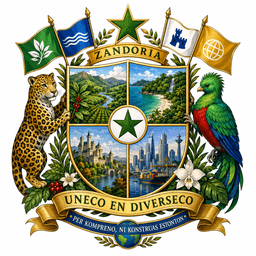
This is the founding bargain, and it is worth stating plainly rather than celebrating vaguely. The Convention of 1994 could not find a natural language that all four territories would accept as neutral, because no natural language is neutral. Spanish would have been a concession by Nord Europa and Oriente Moderno. English would have been a concession by everyone. The Slovak-derived dialects of the Tatra plateau had no claim on the isthmus or the deep-water port. And so the delegates chose a constructed tongue — not because it was beautiful, though it has its elegances, but because its artificiality was the point. A language with no homeland offends no homeland.
What this costs is less often discussed. A federal language that no one speaks at home is a language that must be learned, maintained, and practiced as a civic act rather than a domestic one. The Federal Translation Centre's twelve overseas annexes exist in part because the Republic understood, early, that Esperanto fluency does not sustain itself without institutional support. The weekly Question Time in the Federal Assembly — conducted in Esperanto, with live interpretation — is not merely a procedural formality; it is a performance of the founding choice, repeated every Wednesday, reminding the chamber that the language of governance here is the language that belongs to the polity rather than to any constituent part of it.
We raise this not because the choice is under threat — it is not, and no serious political voice in the Assembly has proposed revisiting it — but because the thirty-first year of the Republic seems to us a reasonable moment to ask whether we are tending the bargain with sufficient care. The Federal Cultural Affairs Minister, Yuki Iwasaki, has before her a proposal to expand Esperanto instruction in regional secondary schools, currently funded at different levels across the four regions. Nord Europa's schools, by most measures, produce the most fluent federal-language graduates; Oriente Moderno's, the least, for reasons that have more to do with curriculum hours than with will. Equity in the federal language is not a sentimental concern. It is a structural one: a citizen who cannot argue her case in Esperanto in Meridian is a citizen whose voice reaches the federal chamber only through translation, and translation, however skilled, is always also interpretation.
The founding generation made a choice that was, in its way, an act of faith — faith that a language built for no one could become, over time, a language that felt like everyone's. We think that faith has been partially vindicated. We think the work of vindicating it fully is still, and always will be, unfinished.